Technology & Intellectual Property Development
Full-Stack Aerial Mycelium Platform Development
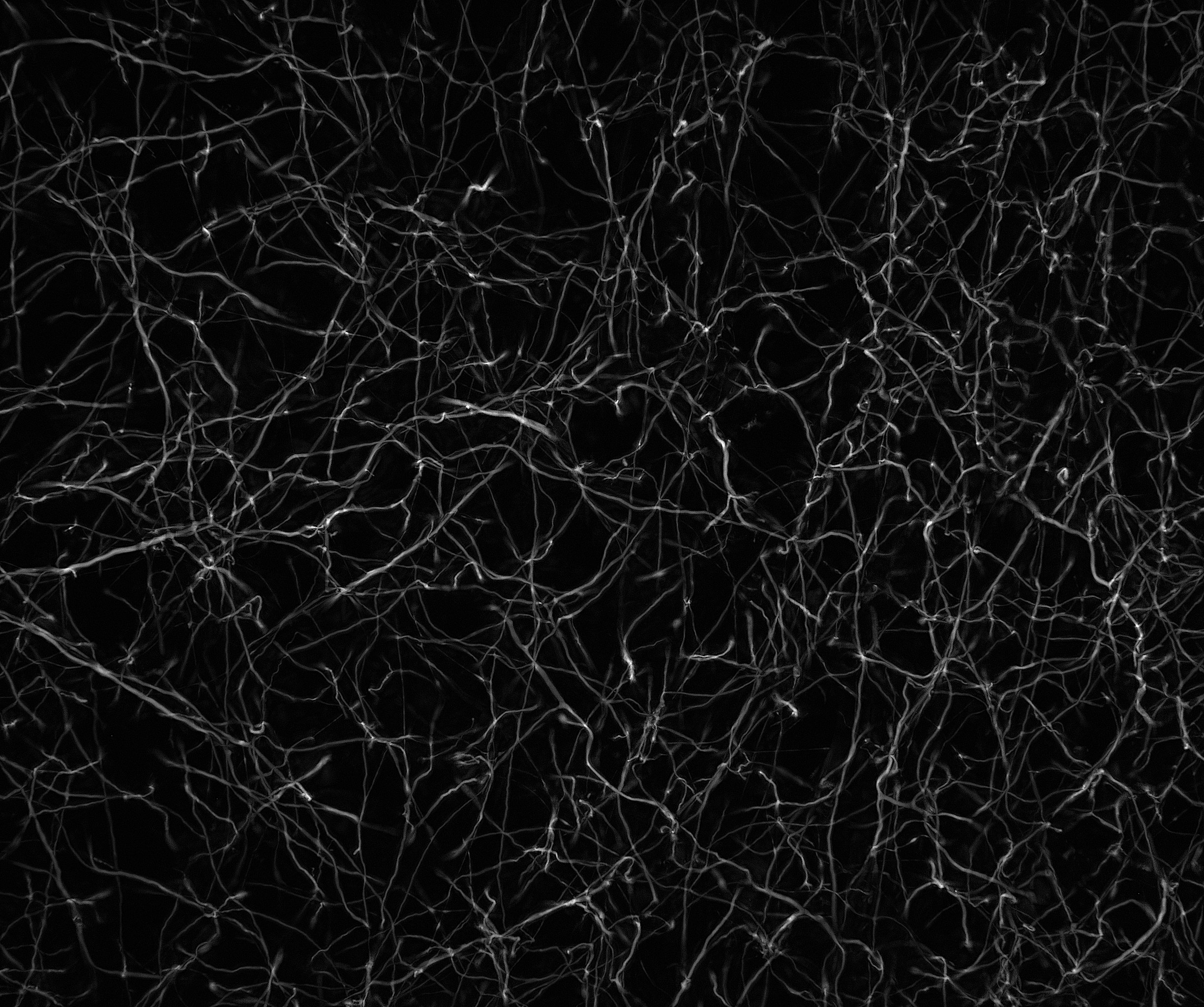
I served as a principal inventor and integrative investigator across Ecovative and MyForest Foods’ aerial mycelium development pipeline, helping bring a novel fungal phenotype from exploratory biological resolution to reproducible industrial-scale manufacture for food applications.
This work spanned benchtop bioreactor development, high-throughput biofoundry design, morphological engineering, adaptive learning, machine-learning-enabled process modeling, and RCA, stabilization, and optimization at farm-scale production. In collaboration with engineering, operations, and analytical teams, I helped develop transferable cultivation logic across multiple experimental formats and translate early biological understanding into practical operating targets, process boundaries, and scale-appropriate control strategies.
During scale-up, I led structured stabilization and optimization activities across substrate, ecological, environmental, and operational dimensions, resolving interacting failure modes and guiding process redesigns that substantially improved yield, biological efficiency, stability, and manufacturing reliability. Ultimately, proving that aerial mycelium could be reconciled with the practical demands of farm-scale production and operated as an efficient, stable, and highly capable manufacturing platform.
This work established foundational scientific and engineering principles underpinning Ecovative and MyForest Foods’ AirMycelium™ platform and contributed to multiple associated patent families. And quite possibly demonstrates one of the few instances of development and industrialization of a novel crop in the modern era.
Mycelium Biofoundries
Advancing biofoundry paradigms is central to my work with Ecovative and essential to overcoming the complexities of mycelium material development, particularly the high-dimensional challenges associated with fungal growth kinetics, morphology, and material properties. By leveraging adaptive design-of-experiment strategies alongside machine learning, our biofoundry systems enable the efficient exploration of vast parametric spaces, revealing novel insights into the optimization of bioprocesses. Central to this progress is the development of novel cultural paradigms for controlling mycelium morphology, bioefficiency, and growth kinetics. These innovations are paired with the design of solid-state bioreactor systems that support the unique demands of fungal systems, allowing for high-throughput experimentation. In conjunction with these advancements, we integrate machine learning tools to create predictive models that dynamically inform process refinement. This synergy between biological engineering, reactor design, and computational learning revolutionizes our approach to solid-state fermentation and mycological engineering, ensuring that each iterative cycle is efficient, informed, and predictive. Ultimately, the biofoundry serves as a transformative framework, merging biology and technology to drive innovation in sustainable material development.
Key Projects
Development of a novel Raimbault column bioreactor system that simulated deep packed bed dynamics and used predictive modeling with high-throughput hyphal network analysis to link inter-particle hyphal network morphologies to the macro-performance of mycelium composites.
Development of novel bench-scale tray bioreactor systems for aerial mycelium, along with innovative cultural formats for high-throughput featurization of mycelium kinetics, morphology, and behavior. These systems were linked with a recursive ML-driven adaptive design-of-experiment platform to form a holistic morphological engineering and process development system for aerial mycelium.
Development of automated workflows for quantitative featurization and feature engineering from image, 3D scan, and time-series data, facilitating efficient translation of this data into machine learning models for process optimization and predictive modeling.
Modeling pilot and farm scale mycelium production dynamics to refine process operations and troubleshoot/de-risk aerial mycelium and composite commercialization.
Mycelium Composites
From 2011-2019 I worked on mycelium composite process and product development exploring and developing packaging materials, low to high-density boards, foams, and even wetland rafts. Most critically I worked to develop core mycelium cultivation methodologies which enabled the world’s first scaled mycelium composite manufacturing systems. The fundamental processes, principles, and mycofabrication techniques I worked to develop were ultimately extended to a mycelium composites ecosystem currently encompassing more than a dozen mycelium technology businesses throughout Europe and the United States.
During this time I also had the privilege and working with, and learning from, Ecovative’s Chief Mycologist Sue Van Hook on early processes and prototypes for the MycoBuoy and MycoBobber platforms.
Additionally, from 2017-2019 I worked on a multi-disciplinary R&D team which developed a novel actively aerated deep-bed bioreactor system for monolithic mycelium composite production, which was realized through an innovative combination of mycelium cultivation techniques, bioreactor engineering, and manufacturing process development (see Hyde et. al. 2019).
Bioprospecting & Fungal Cultivation
Critical to my career in mycelium technology development is a core interest in designing with the physical and behavioral richness of filamentous fungi. Every project starts with attention to and respect for the natural physicality and behavior of each strain I work with, and elucidating the global functional phenotype of each strain is central to realizing the value potential of mycelium technology. To realize this a multi-disciplinary approach combining fungal biology, bioreactor and cultural platform development, physical/metabolic/kinetic featurization, and high-dimensional learning is critical to my practice.
Development of high-throughput aerial mycelium phenotyping systems (proprietary and unpublished).
Development of the foundational cultivation and manufacturing strategies for the commercial mycelium packaging and composites strain used throughout the United States and Europe by Ecovative and it’s licensees.
Development of quantitative analysis methods for inter-particle hyphal morphologies in mycelium composites with elaboration to predictive models for macro-mechanical properties (as partially described in Hyde et al).
Developing methodologies which leverage ecological and temporal dynamics to achieve high-volume material myceliation for scaled mycelium composite manufacturing (as described in Hyde et al. 2019 and United States Patent Grant 9914906).
Description of fruiting conditions for mushroom species for which mushroom production had not been previously described (proprietary and unpublished).
Elaboration of strain isolation and culture maintenance methodologies for the culinarily important mycoparasite Hypomyces lactifluorum (proprietary and unpublished).
Bioprospecting and process development projects spanning hundreds of species and countless strains across the Basidiomycota and Ascomycota.
Open Projects
The Mycelium Engineer
The Mycelium Engineer is an ongoing essay and methodology project that distills 15 years of hands-on mycelium research and development into a practical philosophy of practice for designing and scaling fungal systems.
Drawing on work across applied mycology, bioprocess design, morphological engineering, statistical learning, and industrial scale-up, the project examines how mycelium behaves as both organism and material. It explores the biological, ecological, physical, and operational principles that shape mycelium-based technologies, with particular attention to the gap between laboratory insight and scalable living-material systems.
Through essays, frameworks, and practical methodologies, The Mycelium Engineer brings together fungal biology, systems thinking, design, and machine-learning-enabled experimentation into a unified approach for working with living processes. It serves both as a reflective record of my work and as a public resource for researchers, designers, technologists, and builders interested in the future of mycelium engineering.
Mycelium as a Morphologically Encoded Computational Medium
In this collaborative DARPA funded research project, we investigated how the structural complexity of fungal mycelium influences its electrical behavior, with the goal of developing biodegradable computing substrates. We engineered thin mycelial sheets with tunable morphologies, infused them with conductive polymer (PEDOT:PSS), and analyzed how morphology affected resistive and capacitive properties. My role focused on modeling and quantifying these morphology-conductivity relationships using morphometric and machine learning tools, demonstrating that electrical performance could be predicted, and therefore designed, based on mycelial structural features alone. This work establishes mycelium as a morphologically programmable, low-cost medium for analog computation in physical reservoir computing systems without dependence on signaling behaviors of living mycelium.
FUNGI-TUBE: Fungal Growth Innovation Tube Bioreactor
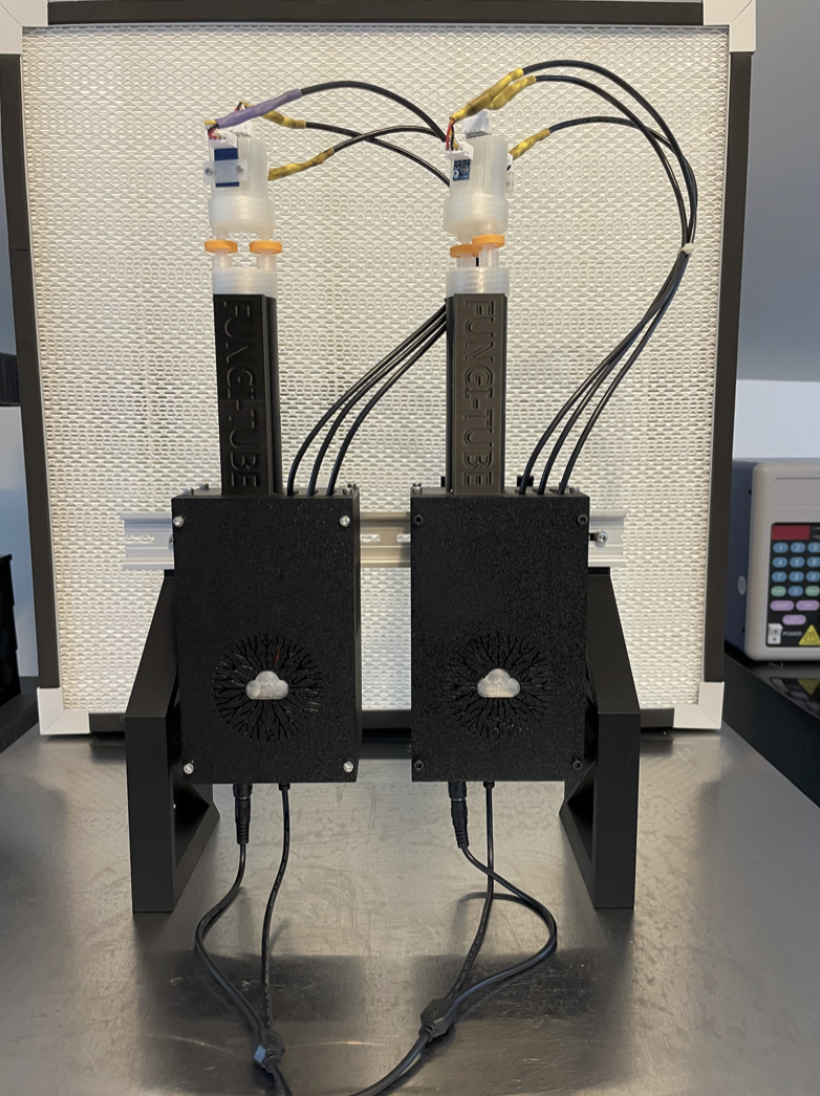
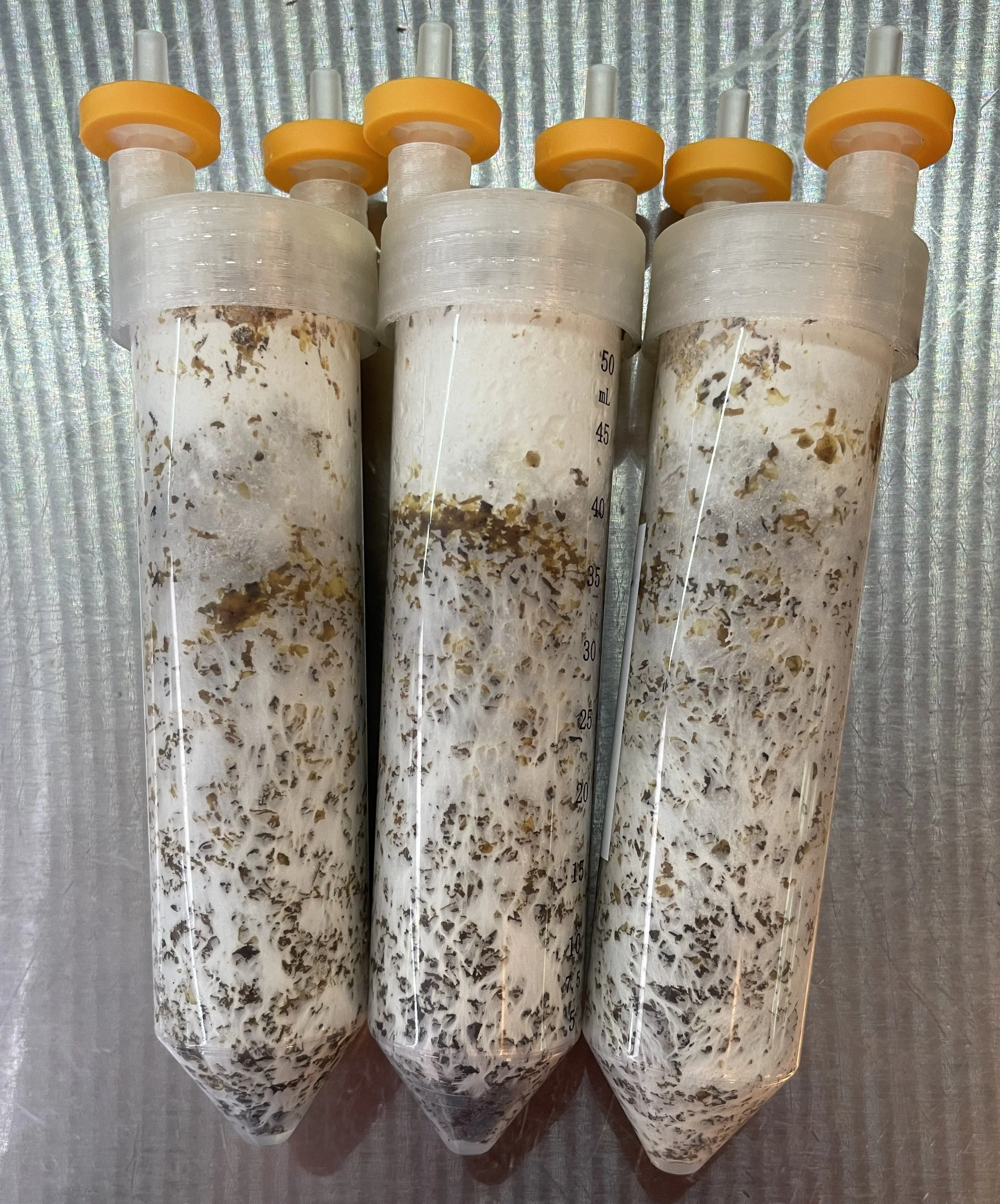
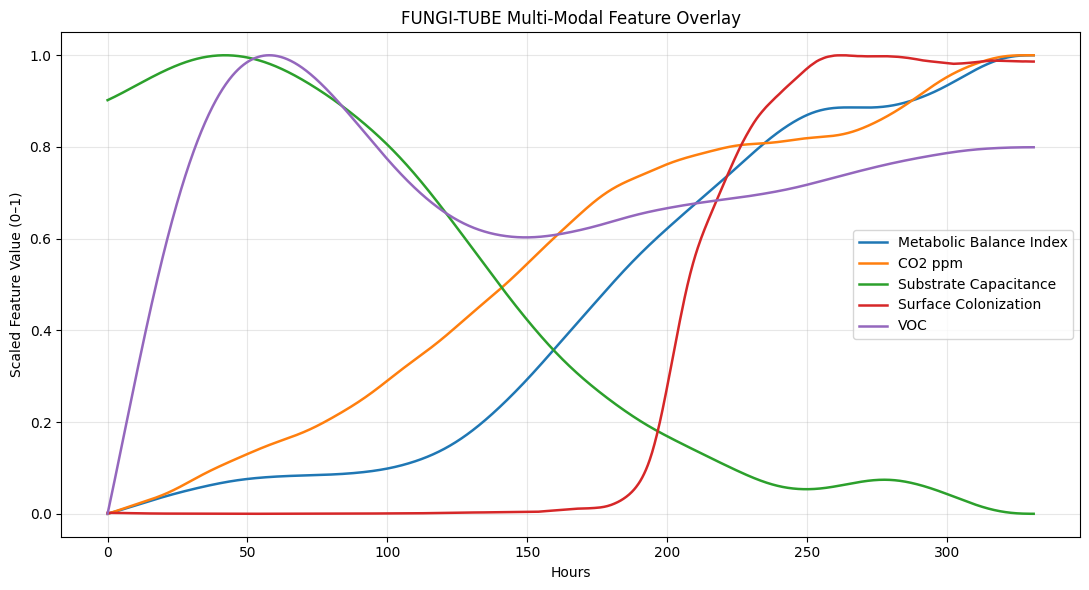
FUNGI-TUBE is an open-source, low-cost solid-state fermentation bioreactor system designed for high-resolution characterization of fungal growth in small experimental formats. Built around modular 50 mL tube-based bioreactors, 3D-printed hardware, ESP32-based sensing, and reproducible data-processing workflows, the system enables parallel screening of fungal strains, substrates, and process variables without destructive sampling. Its central value is non-destructive, time-resolved, multi-modal growth characterization: FUNGI-TUBE combines substrate capacitance, RGB optical sensing, localized temperature, CO₂, humidity, VOC, and derived metabolic features to capture both physical colonization and metabolic activity over time. By converting solid-state fungal growth into structured, interpretable time-series data, the platform supports trait screening, anomaly detection, and data-rich model development for adaptive bioprocess learning.
MycoIris: The Fungal Colony as a Morphological Analogue to the Human Iris
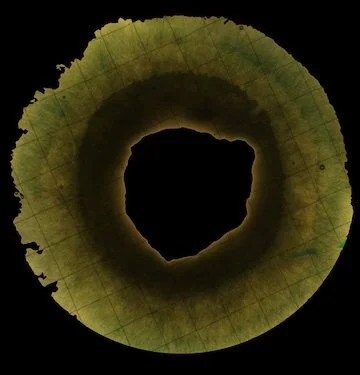
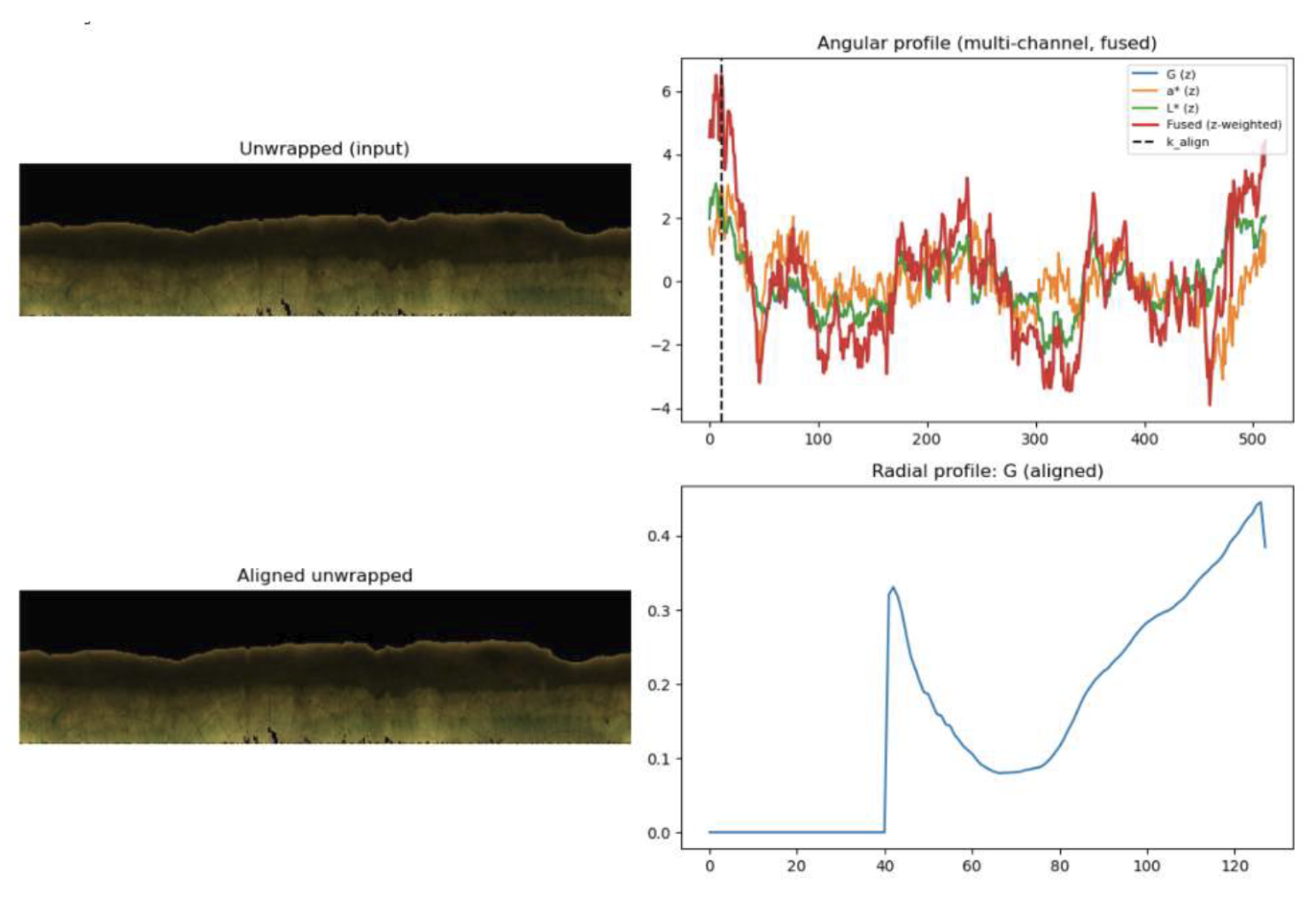
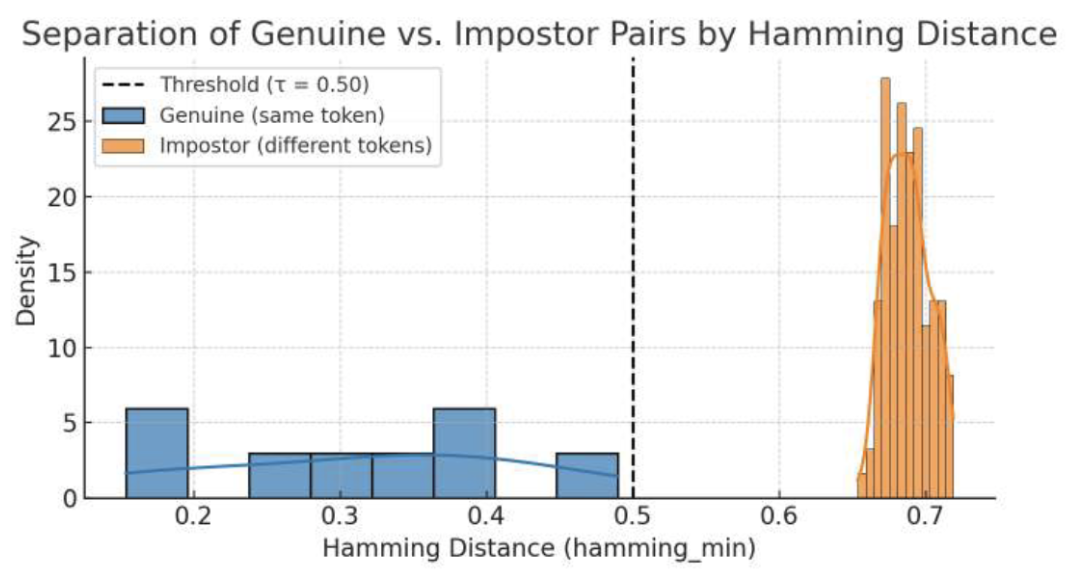
MycoIris is a proof-of-concept proposing fungal colony morphology as a polymorphic biological analogue to the human iris for biometric-style verification and physical unclonable functions. The project explores how radially organized fungal growth, pigment expression, colony texture, and boundary geometry can generate high-entropy, physically embodied identifiers that are external to the human body and potentially revocable. Through cultivated and resin-stabilized fungal tokens, the white paper demonstrates an iris-inspired computational workflow, including image segmentation, polar unwrapping, binary feature encoding, and Hamming-distance comparison, showing that fungal colonies can produce distinctive and reproducible signatures suitable for proof-of-physicality research.
Open Analytical Workflows
A collection of open-source statistical learning, machine learning, experimental design, and data-processing workflows developed around practical R&D and manufacturing problems. These tools emphasize extracting actionable information from small, noisy, high-dimensional, spatial, and non-stationary datasets, with particular focus on process understanding, experimental efficiency, feature engineering, and interpretable modeling.
Process Intelligence & Statistical Process Control
Regime-Aware Process Intelligence Workflow — A two-stage approach for identifying underlying process regimes and extracting meaningful relationships from small, noisy, and potentially unstable process datasets.
Noise-Referenced Stability Feature Selection — A stability-driven feature-selection workflow using null-referenced Random Forest permutation importance to identify predictors that consistently outperform noise.
Experimental Design & Efficient Sampling
Adaptive DoE: Sequential Optimization with Gaussian Processes — An operator-oriented adaptive design-of-experiment workflow using Gaussian-process modeling and sequential learning to optimize a target response.
Power Analysis — A practical workflow for estimating experimental sample size from defined statistical power, variance, and effect-size assumptions.
Sample Size Optimization for Spatial Material Measurements — An empirical subsampling approach for determining the minimum number of spatial measurements required to reliably characterize specimen-level material properties.
Time-Series, Feature Engineering & Predictive Modeling
Time-Series Feature Engineering — A generalized workflow for transforming time-series measurements into interpretable statistical and dynamic features for subsequent analysis and modeling.
Feature Importance & Cluster Analysis — An exploratory modeling workflow combining dimensional reduction, clustering, autocorrelation analysis, and model-interpretability methods including SHAP and LIME.
Multi-Target Regression Neural Network Template — A reusable neural-network workflow for predicting multiple continuous responses, including prediction of new observations and LIME-based model interpretation.
Autoencoder for Imputation — An example workflow exploring autoencoder-based reconstruction for the imputation of missing multivariate data.
Imaging, Morphology & Spatial Data
Morphological Featurization — An image-processing workflow that extracts local and global texture, intensity, and blob-based features to quantitatively represent morphological variation.
Ensemble Anomaly Detection — A multivariate image-analysis workflow for identifying morphologically unusual specimens using an ensemble of anomaly-detection approaches.
Quantitative Colony Morphology Fingerprinting — A workflow for converting fungal colony morphology into quantitative, multivariate morphological fingerprints for comparison and classification.